Case study
Let the buildings speak, then make the first step easy.
Context
Small architecture practices win work through their projects and word of mouth. Their site is often a gallery that looks good but says little, and the contact page is a bare email address.
The problem
Future clients rarely know how to start: they don’t know the right words, the budget, or whether the practice takes projects like theirs. The architect then spends time on calls that go nowhere.
Design choices
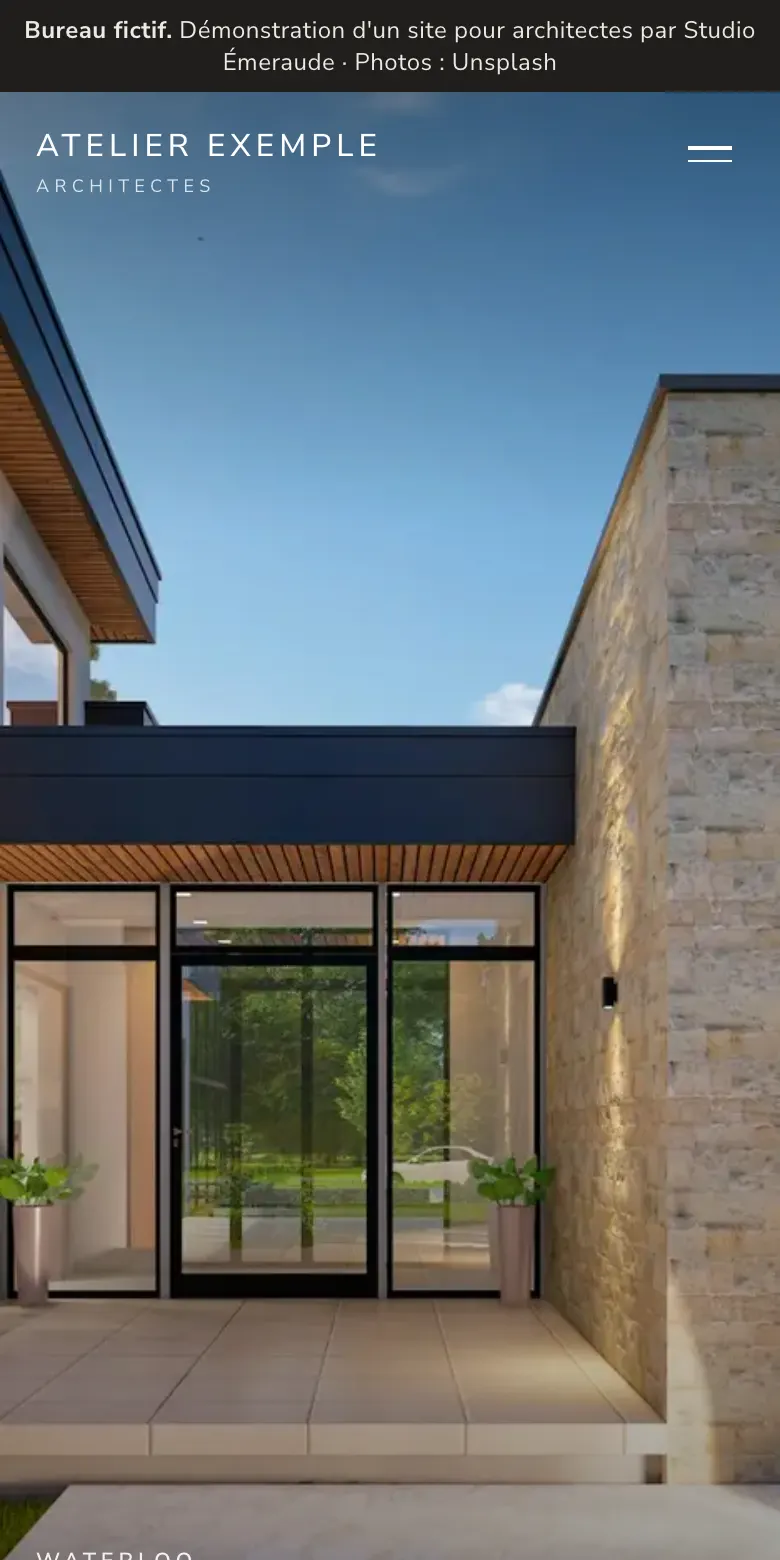
- Full-screen photography with a three-word navigation, so the work is the first thing anyone sees.
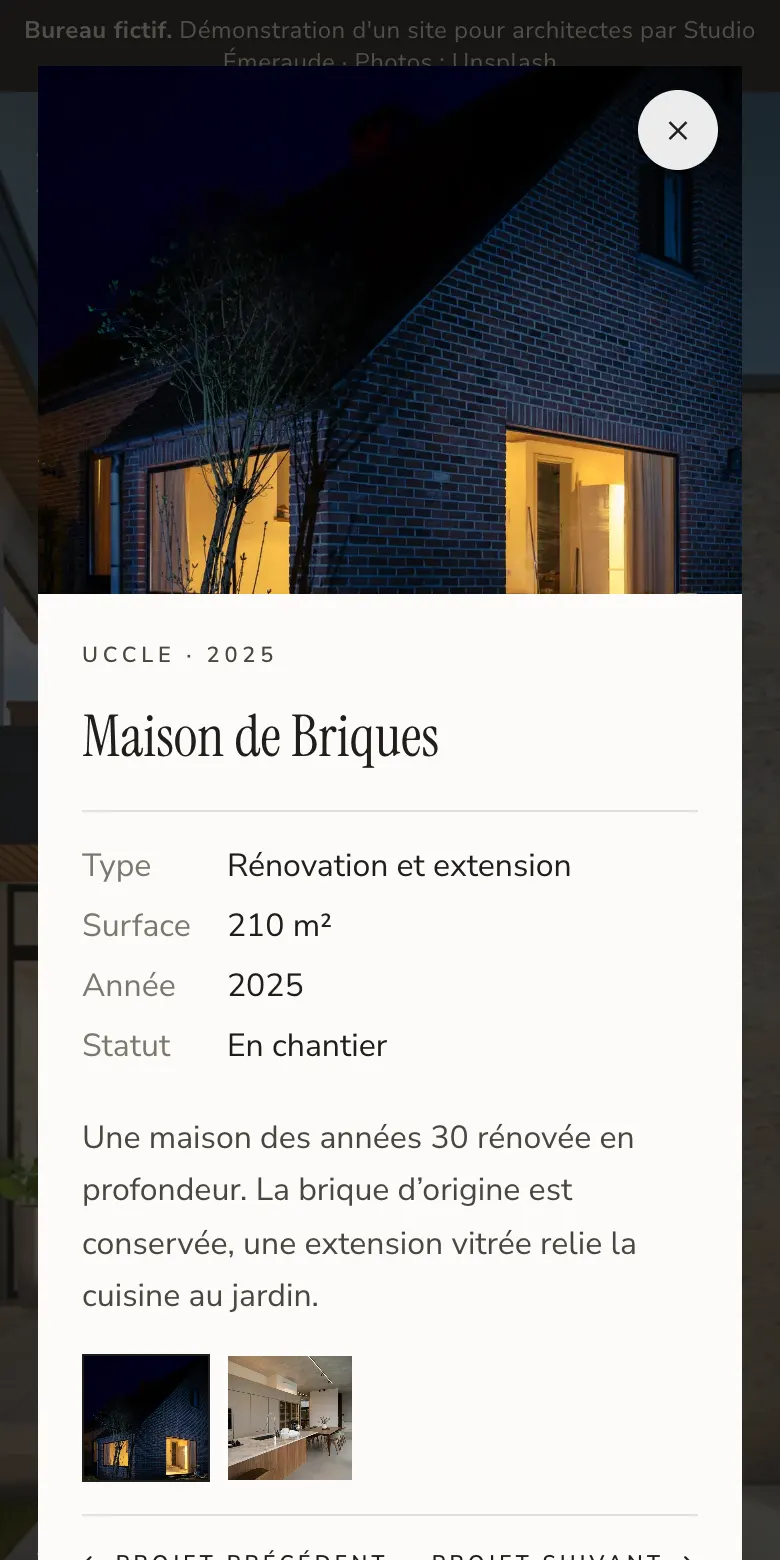
- Project sheets with the facts people look for: type, floor area, year, status, and a few lines on the idea.
- A five-step project request: type of project, location and plot, budget range, timing, contact. One question per screen, no jargon.
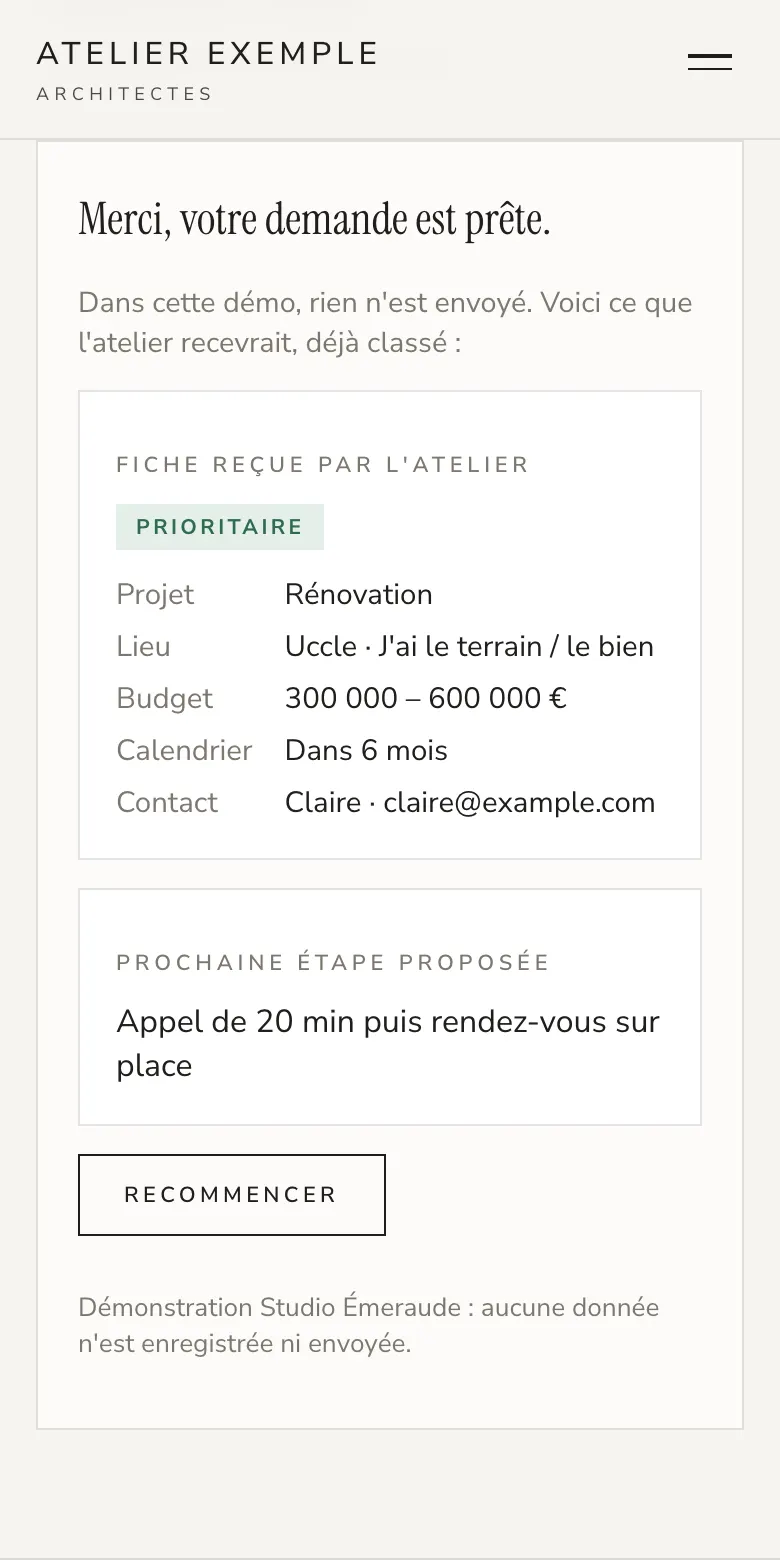
- Requests arrive already sorted with transparent rules (plot in hand, start date, budget), plus a suggested next step.
- French, Dutch and English switchable at any time, which matters for practices in Brussels and Flanders.
- Phone first: most first visits come from a phone, often after seeing a project on social media.
What the demo shows
The home slideshow, six fictional projects with their sheets, the studio page and the full request flow with its summary card. It runs in your browser on sample content.
What a real version needs
The practice’s own photographs and project texts, its tone in three languages, the request form connected to its inbox or CRM, and a check of the profession’s rules on how practices present themselves.